What we grow
Five crops on one block, farmed as a single system, without synthetic pesticide.
The system
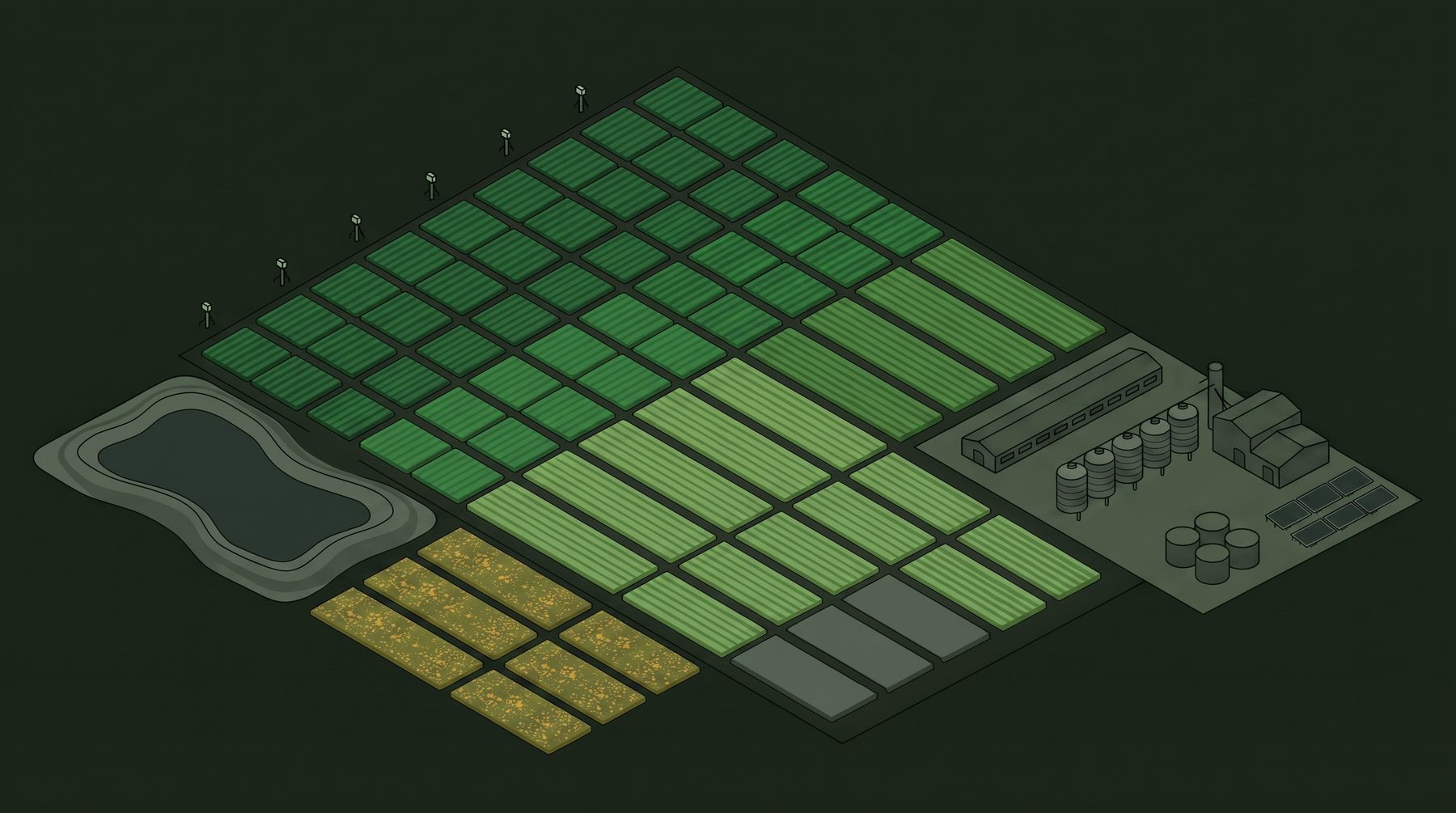
Maize stands across the whole fifty hectares. Everything else grows between its rows — legumes that feed the soil, cucurbits that shade it, pulses that take the block over as the maize dries down. It is a single, continuously productive system rather than a set of separate fields.
Legumes fix nitrogen the maize uses. Cucurbits grow as a living mulch and hold moisture in ground the maize leaves bare. The maize gives the climbing beans something to climb. Each crop is chosen for what it does for the others as much as for what it sells for, and the block produces more from the same hectares than any of them would alone.
Crop protection is biological. The programme is built on registered biological products, and the farm is working through organic conversion with a certification body. Seed is open-pollinated and non-genetically modified, retained and multiplied on farm, and kept segregated from planting to loading.
The crops
Open-pollinated, non-GMO, identity preserved through segregated storage. Sold as whole grain on contract, and milled on site into super maize meal, samp and grits.
Identity-preserved non-GMO oilseed, inoculated and grown between the maize rows. Contracted rather than sold on the open market.
Climbing sugar beans through the maize, and dry and split peas relayed into the block in February. Hand harvested, cleaned and graded on site.
Jam squash and pumpkins grown as ground cover under the maize canopy. Field graded and packed for the fresh market.
Hydroponic barley sprouted indoors on a seven-day cycle, every day of the year, independent of the season and of the field.
Formulated on site from our own and bought-in grain, with a biological input programme. Supplied to feedlots and to commercial and emerging livestock farmers.
The season
Maize goes in from October. The companion crops follow it into the same ground. Harvest runs through the winter months, crop by crop, and a winter barley crop takes the land through to spring. The sprouting chamber runs continuously, and the processing plant runs on stored grain long after the field work has finished.